

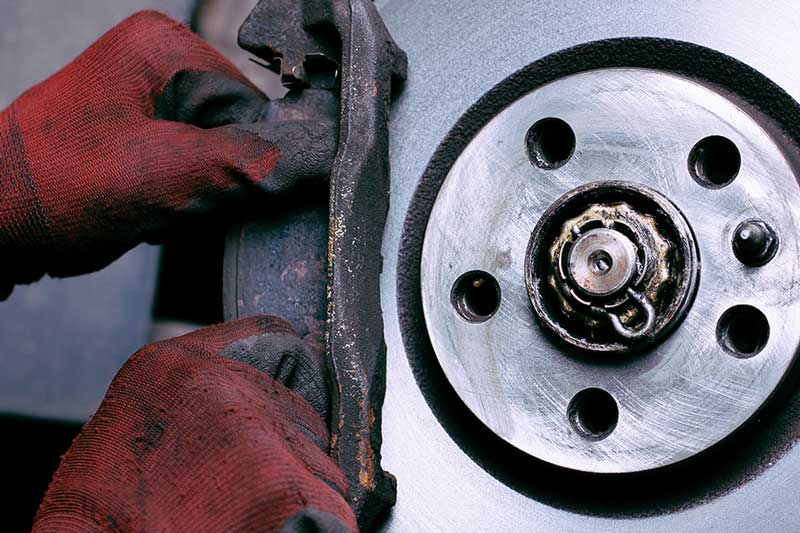
Your Kia's Brakes: Simple in Principle, Rather Less Simple in Practice Braking seems straightforward. Press the pedal and the car slows. Yet between those two events is a system converting pressure from your foot into hydraulic force and, ultimately, friction at the wheels. It does this repeatedly while coping with heat, wear, weather, and several thousand pounds of moving vehicle. Which explains why brakes deserve rather more consideration than they generally receive. For Kia drivers around Novato, CA, understanding the basic hardware is useful, but learning to recognize when the system feels different is more useful still. The Business End Is the Pad and Rotor In a typical disc-brake arrangement, the rotor turns with the wheel while the caliper holds the brake pads around it. Press the brake pedal and hydraulic pressure causes the caliper to squeeze the pads against the rotor. Friction converts the vehicle's kinetic energy into heat and the car slows. Pads are designed to wear and therefore require periodic replacement. Rotors wear too and can develop problems that produce vibration or other changes in braking behavior. A Kia brake inspection can assess these components properly rather than attempting to judge brake condition from mileage alone. Your Foot Starts a Hydraulic Chain Reaction The brake pedal doesn't mechanically push the pads against the rotors. The master cylinder converts pedal input into hydraulic pressure, which is transmitted through brake lines and hoses to the braking components at the wheels. Brake fluid is central to that process, and its condition should be maintained according to Kia's requirements for the specific vehicle. The source recommendation of a universal 2-year fluid change interval is too broad to apply confidently across every Kia, so the vehicle's maintenance schedule is the better guide. If pedal feel changes, brake-system diagnostics can establish why rather than assuming fluid replacement is automatically the answer. ABS Adds Control When the Tire Reaches Its Limit The Anti-lock Braking System monitors wheel speed and can intervene during hard braking to help prevent wheel lock. That's important because a locked tire cannot provide the same steering control as one that's still rotating appropriately. ABS doesn't rewrite the laws of physics, shorten every stop, or compensate for worn tires and excessive speed. It's a support system working alongside the fundamental mechanical brakes. An ABS or brake warning light therefore deserves inspection because it indicates that part of this interconnected system requires attention. Good Brakes Communicate Through the Pedal Changes in braking behavior are often more informative than an arbitrary mileage figure. Squealing may indicate pad wear, while grinding deserves immediate investigation because it can suggest considerably more advanced deterioration. A soft or spongy pedal, increased pedal travel, pulling during braking, or vibration through the pedal or steering wheel are also reasons to arrange a brake inspection. These symptoms can have several causes, so diagnosing them from a generic description isn't particularly clever. The best approach is to inspect the complete braking system and establish what has changed. There Isn't One Mileage at Which Every Brake Wears Out Brake wear depends heavily on use. A vehicle repeatedly slowing in dense traffic asks more of its friction components than one spending long periods at steady highway speeds. Terrain, driving style, vehicle load, and component condition also influence wear. That's why periodic inspections are valuable and why Kia's maintenance guidance should take precedence over a universal replacement interval. A Multi-Point Inspection or routine service visit provides an opportunity to check brake condition before the first indication of wear becomes an unmistakable mechanical complaint. When the Brakes Change, Pay Attention Kia of Marin can help Novato, CA, drivers with brake inspections, brake pad and rotor service, brake-system diagnostics, Multi-Point Inspections, and other Kia maintenance. If you've noticed unusual noises, vibration, pulling, a change in pedal feel, or a brake warning light, don't simply wait for the symptom to become more pronounced. Review available service specials and let the service team determine what the system needs. Brakes work remarkably hard while asking remarkably little from the driver, so when yours begin behaving differently, schedule a brake service appointment online.
 Warranties include 10-year/100,000-mile powertrain and 5-year/60,000-mile basic. All warranties and roadside assistance are limited. See retailer for warranty details.