Today: 8:30AM - 7:00PM
Blog / Novato Kia Service

Brake Components FAQ for Kia Drivers

Your Kia's Brakes: Simple in Principle, Rather Less Simple in Practice

Your Kia's Brakes: Simple in Principle, Rather Less Simple in Practice 

Braking seems straightforward. Press the pedal and the car slows. Yet between those two events is a system converting pressure from your foot into hydraulic force and, ultimately, friction at the wheels. It does this repeatedly while coping with heat, wear, weather, and several thousand pounds of moving vehicle. Which explains why brakes deserve rather more consideration than they generally receive. For Kia drivers around Novato, CA, understanding the basic hardware is useful, but learning to recognize when the system feels different is more useful still. 

The Business End Is the Pad and Rotor 

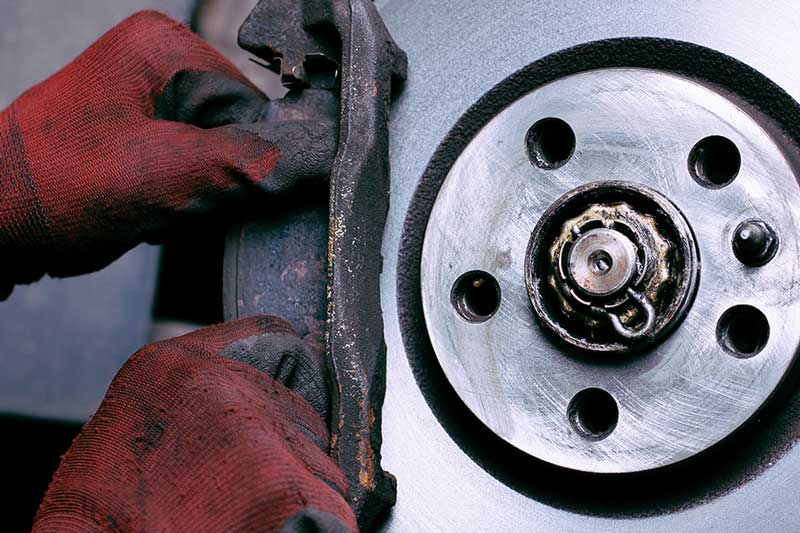
In a typical disc-brake arrangement, the rotor turns with the wheel while the caliper holds the brake pads around it. Press the brake pedal and hydraulic pressure causes the caliper to squeeze the pads against the rotor. Friction converts the vehicle's kinetic energy into heat and the car slows. Pads are designed to wear and therefore require periodic replacement. Rotors wear too and can develop problems that produce vibration or other changes in braking behavior. A Kia brake inspection can assess these components properly rather than attempting to judge brake condition from mileage alone. 

Your Foot Starts a Hydraulic Chain Reaction 

The brake pedal doesn't mechanically push the pads against the rotors. The master cylinder converts pedal input into hydraulic pressure, which is transmitted through brake lines and hoses to the braking components at the wheels. Brake fluid is central to that process, and its condition should be maintained according to Kia's requirements for the specific vehicle. The source recommendation of a universal 2-year fluid change interval is too broad to apply confidently across every Kia, so the vehicle's maintenance schedule is the better guide. If pedal feel changes, brake-system diagnostics can establish why rather than assuming fluid replacement is automatically the answer. 

ABS Adds Control When the Tire Reaches Its Limit 

The Anti-lock Braking System monitors wheel speed and can intervene during hard braking to help prevent wheel lock. That's important because a locked tire cannot provide the same steering control as one that's still rotating appropriately. ABS doesn't rewrite the laws of physics, shorten every stop, or compensate for worn tires and excessive speed. It's a support system working alongside the fundamental mechanical brakes. An ABS or brake warning light therefore deserves inspection because it indicates that part of this interconnected system requires attention. 

Good Brakes Communicate Through the Pedal 

Changes in braking behavior are often more informative than an arbitrary mileage figure. Squealing may indicate pad wear, while grinding deserves immediate investigation because it can suggest considerably more advanced deterioration. A soft or spongy pedal, increased pedal travel, pulling during braking, or vibration through the pedal or steering wheel are also reasons to arrange a brake inspection. These symptoms can have several causes, so diagnosing them from a generic description isn't particularly clever. The best approach is to inspect the complete braking system and establish what has changed. 

There Isn't One Mileage at Which Every Brake Wears Out 

Brake wear depends heavily on use. A vehicle repeatedly slowing in dense traffic asks more of its friction components than one spending long periods at steady highway speeds. Terrain, driving style, vehicle load, and component condition also influence wear. That's why periodic inspections are valuable and why Kia's maintenance guidance should take precedence over a universal replacement interval. A Multi-Point Inspection or routine service visit provides an opportunity to check brake condition before the first indication of wear becomes an unmistakable mechanical complaint. 

When the Brakes Change, Pay Attention 

Kia of Marin can help Novato, CA, drivers with brake inspections, brake pad and rotor service, brake-system diagnostics, Multi-Point Inspections, and other Kia maintenance. If you've noticed unusual noises, vibration, pulling, a change in pedal feel, or a brake warning light, don't simply wait for the symptom to become more pronounced. Review available service specials and let the service team determine what the system needs. Brakes work remarkably hard while asking remarkably little from the driver, so when yours begin behaving differently, schedule a brake service appointment online.


Posted in:

Related Posts

7 Signs Your Kia Needs a Transmission Service

When shifting gears, listen out for strange noises, which are often the first indication of transmission problems. Given how crucial your transmission is to the proper operation of your car, never hesitate to visit your local Kia dealership for transmission service if you think your car needs it. There are many more warning signs of trouble in the gearbox, as outlined below. Grinding Sounds If your gearbox starts emitting metallic grinding sounds when you shift, an internal component such as the gears or synchronizer rings may have become worn out or damaged. Alternatively, the transmission fluid may be low or degraded. Whining Sounds Automatic transmissions sometimes start to whine when the fluid is low and no longer provides proper lubrication or hydraulic pressure. A faulty torque converter might also create a whining noise. Ask a technician to diagnose the cause of any odd sounds you hear. Delayed Engagement Occasionally, a malfunctioning gearbox can seem hesitant to shift, leaving a delay of a few seconds before the new gear fully engages. This may result from low or bad fluid, which is often the cause of gearbox problems. Delayed shifting might also be caused by faulty control module, transmission filter, transmission bands, or issues with the clutch. Slipping Gears If a transmission problem worsens, it may result in slipping gears. Here, the gears could change or slip into neutral all on their own, causing a safety hazard that should be remedied at once. Sticking Gears More serious faults can also prevent the gears from shifting at all. If your gears stick and refuse to shift, there may be a malfunction with the shift linkage wire, torque converter, clutch packs, or fluid. Revving While Shifting With any of the above issues, the engine is likely to rev loudly as it struggles to deliver power to the wheels despite a faulty transmission. This sometimes feels like trying to accelerate on ice. Dripping Transmission Fluid Have you noticed a puddle of reddish fluid under your car? If so, you may have a transmission fluid leak on your hands. It's unwise to drive until the leak has been repaired and the fluid topped up. As you can see from these tips, diminished fluid is the most common cause of gearbox trouble. Visit Your Kia Dealership To Have Your Gearbox Checked Your transmission should ideally be inspected by a professional every 60,000 miles, as long as it's an automatic transmission. The fluid will need to be flushed every 60,000 to 100,000 miles. Manual transmissions require more frequent servicing than this. Have your car's gearbox serviced today at Kia of Marin in Novato, CA.

The Ultimate Service Checklist for Maintaining Your New Kia

Maintaining a new Kia takes more than just keeping it clean. If you're unsure of where to start, here's a detailed service checklist. You can have all necessary maintenance services promptly carried out at your local Kia dealership. The Ultimate Service Checklist for Maintaining Your New Kia Oil Changes Your engine needs consistently fresh, high-quality motor oil, which lubricates and cleans the internal parts. You'll need to change your oil twice a year, or more often if you put your engine under excessive strain with regular short trips of under five miles or long commutes in heavy traffic. Fluid Flushes Coolant needs to be checked and topped up frequently and flushed entirely every 30,000 miles or so. Likewise, the brake fluid, transmission fluid, differential fluid, power steering fluid, and windshield washer fluid all must be carefully maintained and kept fresh. Filter Replacements The air filter keeps dirt, insects, and other contaminants out of the airflow but gradually becomes clogged up. You'll need to replace your engine air filter once a year on average. The cabin air filter usually needs replacing with a similar interval. Brake Inspections Your brakes undergo a great deal of continual pressure, which steadily wears down the pads and rotors. These essential brake parts must be replaced periodically; watch out for symptoms of worn-out brake pads and rotors, such as squealing sounds or vibrations through the brake pedal. In addition, biannual brake inspections with a trusted technician will help catch any faults or brake fluid leaks early on. Tire Rotations Braking, acceleration, and steering precision all depend on the tires. As tires tend to wear down unevenly, you'll need to have yours rotated twice a year or more. In addition, check tire air pressure once a month and install new tires as soon as the old tire treads near 2/32 of an inch in depth. Windshield Wiper Changes The windshield wipers are often overlooked but vital for good visibility in poor weather conditions. It's advisable to replace your windshield wipers once or twice a year. Battery Replacements Without a fully functioning battery, the electronics throughout your car will falter and fail. Most notably, the starter and spark plugs won't be able to start the engine. You're likely to need a new battery every three to five years. Book Routine Services at Your Kia Dealership Our friendly, experienced technicians will be happy to set up a suitable maintenance schedule for your car. With courteous reminders, we can help to ensure you never miss a service, thereby keeping your car in tip-top condition for as long as possible. Visit Kia of Marin in Novato, CA, today to have your car serviced by qualified technicians. We're a local full-service dealership offering a one-stop shop for all your automotive needs.

The Ultimate Guide to Kia Scheduled Maintenance: What You Need to Know

Looking after your Kia requires both routine maintenance services at your local Kia dealer and prompt responses to early warning signs of a fault. If you get the following essential Kia maintenance tasks carried out regularly, you're less likely to experience a roadside breakdown or accident. Your car will last longer in great shape, and you'll also save money on costly repairs down the road. The Most Frequent Maintenance Tasks Let's look first at the services that need to be scheduled most frequently. Along with monthly tire pressure checks at home, it's important to have your tires rotated and inspected twice a year at your local dealership. Your safety also requires reliable brakes, which should be examined every six months by a professional who can replace worn-out brake pads and rotors as required. Motor oil needs to be changed at similar intervals to keep your engine in good working order. During these biannual oil changes, the technician will also change the oil filter if it's clogged up. Your coolant and other essential vehicle fluids should also be regularly checked to ensure they're in good condition and at suitable levels; a trusted technician can flush any fluid that deteriorates or becomes contaminated. Your car's bodywork should also be waxed twice a year. Longer-Term Maintenance Tasks In the longer term, both your cabin and engine air filters will probably need to be replaced every year to keep fresh oxygen flowing into your vehicle. Car wheels slowly become misaligned over time and typically need to be professionally realigned every two or three years; do this more frequently if you notice any worsening in your handling and steering. Spark plugs are crucial to your engine's performance and should be inspected and replaced as frequently as your owner's manual recommends. Car batteries also serve a vital function and tend to last from three to five years; keep a close eye on your battery as it ages and get a replacement when it starts to fail. Serpentine belts need to be replaced every 50,000 to 100,000 miles and tires usually last four to six years before replacements are required. Maintenance Tasks As the Seasons Change The most important seasonal maintenance involves preparing a car for winter. It's advisable to install special winter windshield wipers and also make sure your coolant is the appropriate type to resist freezing temperatures. You'll also need to install winter tires and check your battery frequently throughout the colder months; low temperatures can deal a lot of harm to car batteries. Set Up a Routine Schedule at Your Local Kia Dealership All these maintenance tasks can be a little overwhelming for some drivers. The technicians at your local dealership can arrange a suitable schedule and then send you polite reminders whenever an upcoming visit is due. This helps take the stress out of keeping your car in great condition. Visit Kia Marin today in Novato, CA, to schedule all the essential vehicle services you need to keep your car in tip-top condition. We're a local full-service dealership providing the region's drivers with consistently excellent cars, maintenance services, and customer care, whatever your automotive needs might be.