
Today: 8:30AM - 7:00PM
Blog / Kia EV3

Meet the 2027 Kia EV3: An Affordable, Award-Winning Electric SUV

Kia EV3 - Test Drive Today at Kia of Marin - Novato, CA
Thinking about making the switch to an electric vehicle? The all-new 2027 Kia EV3 could be the perfect place to start.
Electric vehicles are becoming more accessible than ever, and Kia is helping lead the way with the arrival of the all-new 2027 Kia EV3. Combining impressive driving range, advanced technology, modern SUV styling, and a starting MSRP of just $29,890, the EV3 brings an exciting new option to drivers looking to go electric without breaking the bank.

Already recognized internationally as the 2025 World Car of the Year, the Kia EV3 arrives in the U.S. with an impressive combination of range, technology, and affordability.


For North Bay drivers, the EV3 offers an appealing combination of everyday practicality and electric performance. Whether you're commuting around the Bay Area, running errands in town, or planning a weekend getaway, this compact electric SUV is designed to make the transition to electric driving easier.

What Is the 2027 Kia EV3?
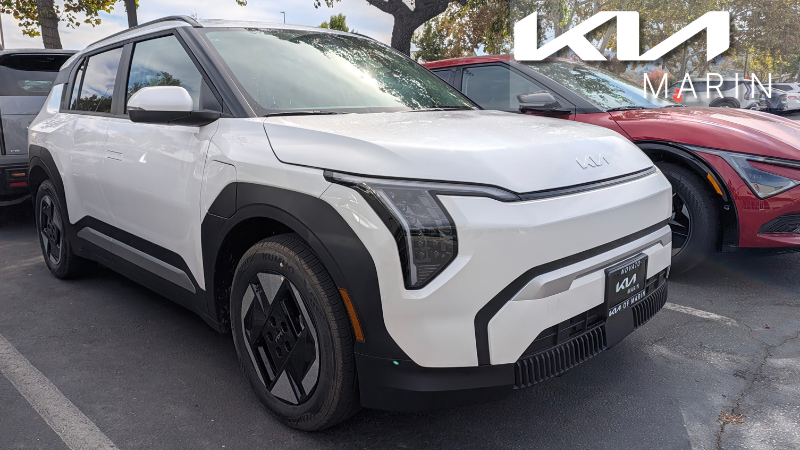
The 2027 Kia EV3 is an all-new compact electric SUV and the most affordable fully electric vehicle in Kia's lineup.
Taking design inspiration from the larger Kia EV9, the EV3 delivers bold styling, a spacious interior, and modern technology in a smaller, more approachable package.
EV3 offers several notable features:
  • Starting MSRP of $29,890 for the Light FWD trim
  • Up to an EPA-estimated 321 miles of driving range on Wind FWD and Land FWD trims
  • Available all-wheel drive for added traction and confidence
  • Approximately 29–31 minutes to charge from 10% to 80% using compatible DC fast-charging equipment
  • Standard dual 12.3-inch panoramic displays and a 5-inch climate display
  • A built-in North American Charging Standard (NACS) port for convenient access to compatible charging networks
With these features, the EV3 brings many of the conveniences found in more expensive electric SUVs to a competitive price point.

An Award-Winning Electric SUV: 2025 World Car of the Year

The Kia EV3 may be new to American drivers, but it's already earned international recognition. In April 2025, the EV3 was named 2025 World Car of the Year, one of the automotive industry's most prestigious global honors.
Selected by a panel of 96 automotive journalists representing 30 countries, the internationally introduced EV3 earned recognition for its innovative design, technology, efficiency, and overall value.

The award also marked Kia's second consecutive World Car of the Year victory, following the Kia EV9 in 2024.
For drivers considering their first electric vehicle, this recognition offers another reason to take a closer look at the EV3. Its combination of practical range, advanced features, and accessible pricing demonstrates that an affordable electric SUV can still deliver an award-winning experience.

Learn more about the Kia EV3's 2025 World Car of the Year award.
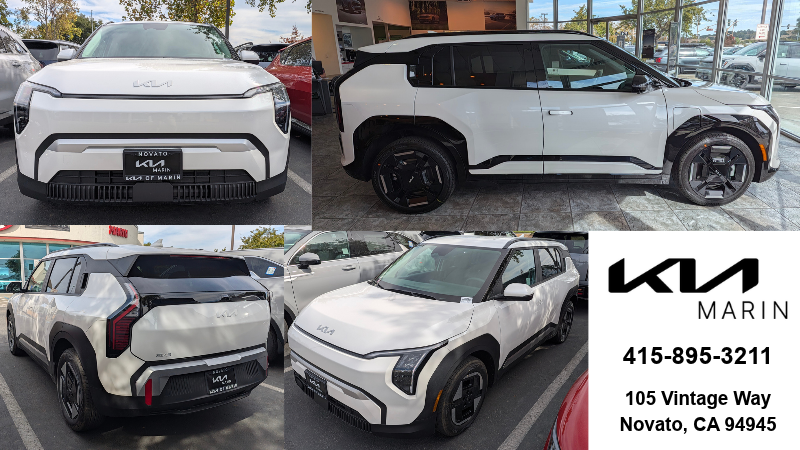
Kia EV3 - Test Drive Today at Kia of Marin - Novato, CA
An Electric SUV Designed for Everyday Driving
One of the biggest questions first-time EV buyers have is simple: Will an electric vehicle fit my lifestyle?

The Kia EV3 is designed to help answer that question.

For many Marin County drivers, daily driving may consist of trips up and down Highway 101, running errands around town, and the occasional trips into San Francisco or into Napa or Sonoma County. With an EPA-estimated 221 miles of range on the entry-level Light trim and up to 321 miles on select long-range models, the EV3 provides options for different driving needs. Charging is another important consideration. The EV3 features a built-in NACS charging port, allowing drivers to use compatible Tesla Superchargers and other supported charging stations. With DC fast charging, the long-range EV3 can recharge from approximately 10% to 80% in as little as 31 minutes under optimal conditions. For drivers who can charge at home, the EV3 also offers the convenience of starting each day with a charged battery, potentially reducing the need for frequent public charging stops.

Kia EV3 vs. Chevrolet Bolt vs. Nissan LEAF: How Do They Compare?
The affordable electric vehicle segment is becoming increasingly competitive, giving first-time EV buyers more choices. Two of the EV3's closest competitors are the redesigned 2027 Chevrolet Bolt and the 2026 Nissan LEAF.

Kia EV3 vs. Chevrolet Bolt
The 2027 Chevrolet Bolt returns as one of the most affordable electric vehicles on the market, with a starting MSRP of $27,600 before destination charges and an EPA-estimated driving range of 262 miles.

The Kia EV3 has a starting MSRP of $29,890, making it another accessible option for budget-conscious shoppers.
Where the EV3 distinguishes itself is in its range of available configurations and SUV-focused design. While the Bolt offers a strong combination of affordability and efficiency, the EV3 offers an available long-range battery with up to 321 miles of EPA-estimated range, available all-wheel drive, and a variety of comfort and technology upgrades. For buyers who want more flexibility when shopping for their electric vehicle, the EV3 provides several appealing model options to choose from, each designed with the driver in mind.
 
Kia EV3 vs. Nissan LEAF
The redesigned 2026 Nissan LEAF is another compelling option for first-time EV buyers, offering a starting MSRP of $29,990 and up to 303 miles of EPA-estimated driving range on the LEAF S+. Both vehicles offer modern styling, convenient charging features, and technology designed to make electric driving easier.

The Kia EV3, however, offers some distinct advantages for shoppers seeking the versatility of a compact SUV.
With up to 321 miles of EPA-estimated range on select trims, available all-wheel drive, and up to 56.5 cubic feet of cargo capacity with the rear seats folded, the EV3 is well-equipped for commuting, shopping, and weekend adventures. Ultimately, both vehicles are strong options, but the EV3 may be particularly appealing to drivers seeking a balance of electric efficiency, SUV practicality, and available premium features.
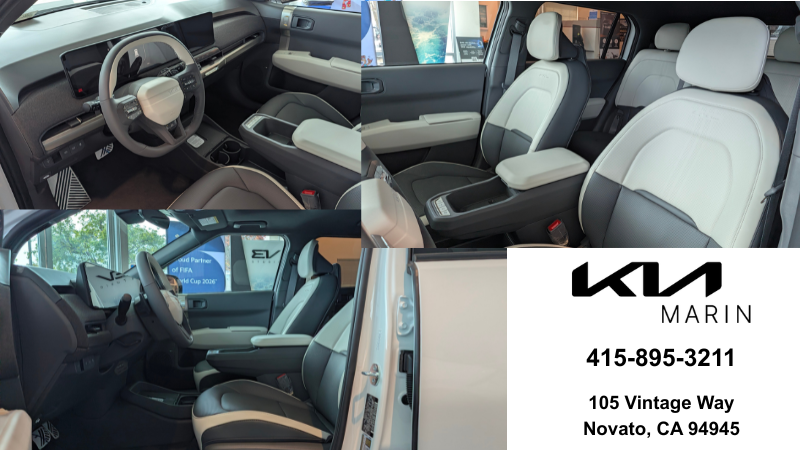
Kia EV3 Interior - Test Drive Today at Kia of Marin - Novato, CA
Why the Kia EV3 Makes Sense for First-Time EV Buyers
For shoppers considering their first electric vehicle, the Kia EV3 offers several compelling advantages.
  1. Accessible pricing: With a starting MSRP below $30,000, EV3 offers an entry point into Kia's all-electric SUV lineup.
  2. Range for everyday life: Multiple battery and drivetrain options allow shoppers to prioritize affordability, maximum driving range, or available all-wheel-drive capability.
  3. Convenient charging: NACS compatibility and DC fast charging make it easier to plan charging stops at compatible public stations.
  4. Modern technology: Standard panoramic displays, advanced driver assistance features, and available premium amenities create an experience that feels anything but entry-level.
  5. Practical SUV design: Flexible cargo space, a comfortable passenger cabin, and compact exterior dimensions make the EV3 a useful option for the wide variety of driving conditions found throughout Marin County.
For drivers concerned about making the switch from gasoline to electric power, the EV3 offers an approachable way to experience the benefits of EV ownership.
 
Explore the 2027 Kia EV3 at Kia of Marin
The all-new 2027 Kia EV3 brings an exciting combination of value, versatility, and technology to the electric SUV market. Whether you're exploring electric vehicles for the first time or simply looking for a more affordable way to enjoy all-electric driving, the EV3 deserves a closer look. And right now, Eligible first-time EV buyers may qualify for an additional $3,500 through California's MyFirstEV program, subject to program requirements and availability.

At Kia of Marin in Novato, California, our team can help you compare in stock EV3 models, explore charging options, and learn more about the benefits of Kia’s electric vehicle ownership.

Ready to discover what the Kia EV3 has to offer?

Explore the 2027 Kia EV3 or browse our available new Kia EV3 inventory to get started.

Posted in:

Related Posts

How to Budget for a Car Without Letting the Monthly Payment Fool You

How to Budget for a Car: A Step-by-Step Guide 

How to Budget for a Car Without Letting the Monthly Payment Fool You Buying a car becomes considerably easier when you decide what you can afford before deciding what you want. A monthly payment on its own doesn't tell you much. Insurance, fuel, maintenance, registration, interest, and the length of the loan all contribute to what the vehicle will cost. For drivers around Novato, CA, building a car budget before browsing new Kia inventory can help narrow the search to vehicles that fit both your needs and your finances. Step 1: Work Out What You're Already Spending Start with monthly take-home income, then subtract housing, utilities, food, debt payments, savings, and other regular expenses. What's left gives you a more realistic idea of how much room exists for a vehicle. One commonly cited budgeting guideline is to keep total transportation costs—including the car payment, insurance, fuel, and other vehicle expenses—within roughly 15% to 20% of take-home pay, but that's a guideline, not a universal rule. Someone with substantial housing costs or other debt may need to stay below it. The important part is calculating the entire vehicle expense instead of deciding that a certain monthly car payment simply sounds affordable. Step 2: Set the Budget Before Shopping for the Car Once you know what your monthly finances can support, work backward to establish a purchase range. If you're financing, the down payment, interest rate, and loan term all affect the monthly figure and total amount paid. Putting more money down can reduce the amount financed and the interest paid over the loan, although buyers should avoid emptying emergency savings simply to reach an arbitrary percentage. A shorter loan term generally means larger monthly payments but less total interest, while stretching the loan across more years can make the payment look smaller without making the vehicle cheaper. Exploring Kia financing options before settling on a model can make these differences easier to compare. Step 3: Remember That Cars Continue Costing Money After You Buy Them Purchase price is only the beginning. Insurance premiums can vary substantially between vehicles, and fuel, registration, tires, and routine vehicle maintenance need space in the budget as well. Buyers considering a Kia hybrid or Kia plug-in hybrid should compare energy costs based on how and where they'll drive instead of assuming one powertrain will automatically produce the lowest ownership expense. Before signing anything, estimate the monthly payment alongside insurance and expected fuel costs, then leave room for scheduled Kia service and occasional repairs. A vehicle that fits the payment but leaves no room for ownership costs doesn't truly fit the budget. Step 4: Compare Financing Before You Commit Getting pre-approved through a bank or credit union can provide an interest rate and borrowing limit to compare against dealership financing. Check your credit reports and scores beforehand, because credit history can influence the annual percentage rate offered by lenders. Compare the APR, loan term, amount financed, monthly payment, and total interest instead of focusing on a single number. Manufacturer incentives and special financing programs may also be available on eligible models, so check current Kia offers and incentives when you're ready to shop. A lower APR can make a meaningful difference across several years of payments. A Few Questions Are Worth Answering Before You Shop How much should you put down? There isn't one percentage that fits every buyer, although 10% to 20% is a commonly suggested range. A larger down payment reduces the amount financed, but maintaining adequate savings still matters. Does credit affect the interest rate? Generally, yes; lenders consider credit along with other factors when determining loan terms. Lease or buy? Leasing and purchasing have different cost structures, mileage considerations, ownership outcomes, and restrictions, so compare both against how long you expect to keep the vehicle and how much you drive. And if you already own a car, getting a trade-in value can help you understand how much equity may be available to apply toward the next purchase. Build the Budget, Then Find the Kia The best time to work out your vehicle budget is before a salesperson hands you the keys. Novato, CA, drivers can browse new Kia vehicles at Kia of Marin, compare models such as the Kia Sorento, Kia Sportage, and Kia K4, explore available finance options, and estimate the value of a current trade before choosing a vehicle. Once you've narrowed the search to models that fit both the budget and the job, schedule a test drive online and see which one makes sense from behind the wheel.

Your Kia's Brakes: Simple in Principle, Rather Less Simple in Practice

Brake Components FAQ for Kia Drivers

Your Kia's Brakes: Simple in Principle, Rather Less Simple in Practice Braking seems straightforward. Press the pedal and the car slows. Yet between those two events is a system converting pressure from your foot into hydraulic force and, ultimately, friction at the wheels. It does this repeatedly while coping with heat, wear, weather, and several thousand pounds of moving vehicle. Which explains why brakes deserve rather more consideration than they generally receive. For Kia drivers around Novato, CA, understanding the basic hardware is useful, but learning to recognize when the system feels different is more useful still. The Business End Is the Pad and Rotor In a typical disc-brake arrangement, the rotor turns with the wheel while the caliper holds the brake pads around it. Press the brake pedal and hydraulic pressure causes the caliper to squeeze the pads against the rotor. Friction converts the vehicle's kinetic energy into heat and the car slows. Pads are designed to wear and therefore require periodic replacement. Rotors wear too and can develop problems that produce vibration or other changes in braking behavior. A Kia brake inspection can assess these components properly rather than attempting to judge brake condition from mileage alone. Your Foot Starts a Hydraulic Chain Reaction The brake pedal doesn't mechanically push the pads against the rotors. The master cylinder converts pedal input into hydraulic pressure, which is transmitted through brake lines and hoses to the braking components at the wheels. Brake fluid is central to that process, and its condition should be maintained according to Kia's requirements for the specific vehicle. The source recommendation of a universal 2-year fluid change interval is too broad to apply confidently across every Kia, so the vehicle's maintenance schedule is the better guide. If pedal feel changes, brake-system diagnostics can establish why rather than assuming fluid replacement is automatically the answer. ABS Adds Control When the Tire Reaches Its Limit The Anti-lock Braking System monitors wheel speed and can intervene during hard braking to help prevent wheel lock. That's important because a locked tire cannot provide the same steering control as one that's still rotating appropriately. ABS doesn't rewrite the laws of physics, shorten every stop, or compensate for worn tires and excessive speed. It's a support system working alongside the fundamental mechanical brakes. An ABS or brake warning light therefore deserves inspection because it indicates that part of this interconnected system requires attention. Good Brakes Communicate Through the Pedal Changes in braking behavior are often more informative than an arbitrary mileage figure. Squealing may indicate pad wear, while grinding deserves immediate investigation because it can suggest considerably more advanced deterioration. A soft or spongy pedal, increased pedal travel, pulling during braking, or vibration through the pedal or steering wheel are also reasons to arrange a brake inspection. These symptoms can have several causes, so diagnosing them from a generic description isn't particularly clever. The best approach is to inspect the complete braking system and establish what has changed. There Isn't One Mileage at Which Every Brake Wears Out Brake wear depends heavily on use. A vehicle repeatedly slowing in dense traffic asks more of its friction components than one spending long periods at steady highway speeds. Terrain, driving style, vehicle load, and component condition also influence wear. That's why periodic inspections are valuable and why Kia's maintenance guidance should take precedence over a universal replacement interval. A Multi-Point Inspection or routine service visit provides an opportunity to check brake condition before the first indication of wear becomes an unmistakable mechanical complaint. When the Brakes Change, Pay Attention Kia of Marin can help Novato, CA, drivers with brake inspections, brake pad and rotor service, brake-system diagnostics, Multi-Point Inspections, and other Kia maintenance. If you've noticed unusual noises, vibration, pulling, a change in pedal feel, or a brake warning light, don't simply wait for the symptom to become more pronounced. Review available service specials and let the service team determine what the system needs. Brakes work remarkably hard while asking remarkably little from the driver, so when yours begin behaving differently, schedule a brake service appointment online.

How to Budget for a Car: A Complete Guide for Planning Your Next Vehicle Purchase

How to Budget for a Car: A Complete Guide for Planning Your Next Vehicle Purchase

Buying a car is an important financial decision that requires more than choosing a model you like. A well-planned car budget helps you understand what you can comfortably afford, prepare for ownership expenses, and select a vehicle that fits your lifestyle without creating unnecessary financial stress. Whether you are purchasing your first vehicle, upgrading to a newer model, or replacing your current car, understanding the costs involved can make the process easier. Creating a realistic budget allows you to compare vehicles, explore financing options, and make a decision based on your overall financial situation. Determine How Much You Can Afford Before Shopping Before visiting a dealership or browsing available vehicles online, take time to review your current finances. A car budget should account for more than just the monthly payment. It should include expenses associated with owning and maintaining a vehicle over time. Start by reviewing your monthly income, existing expenses, and financial goals. This can help you determine how much room you have available for a vehicle purchase while maintaining your other responsibilities. Important factors to consider include: Monthly income and current expenses. Existing loan or credit obligations. Savings goals and emergency funds. Transportation needs and driving habits. Expected vehicle ownership costs. A vehicle that fits your budget should provide reliable transportation while allowing you to maintain financial flexibility. Understand the True Cost of Owning a Vehicle Many buyers focus only on the purchase price or monthly payment when creating a car budget. However, vehicle ownership includes several additional expenses that should be considered before making a decision. The total cost of owning a vehicle can include: Monthly loan payments. Auto insurance premiums. Fuel or charging costs. Routine maintenance. Repairs and replacement parts. Registration and taxes. Tires and other wear items. Understanding these expenses helps you create a more accurate budget and choose a vehicle that aligns with your long-term plans. Consider Your Down Payment and Trade-In Value A down payment can play an important role when purchasing a vehicle. Providing money upfront may reduce the amount financed and can help structure your loan around your preferred budget. If you currently own a vehicle, a trade-in can also help offset the cost of your next purchase. The value of your trade-in depends on factors such as mileage, condition, vehicle history, and current market demand. Before shopping for your next vehicle, consider: How much you can comfortably put toward a down payment. The estimated value of your current vehicle. Whether selling or trading in makes the most sense. How your trade-in may affect your financing options. Estimate Your Monthly Car Payment Understanding your potential monthly payment can help you narrow your vehicle search. Monthly payments are influenced by several factors, including the vehicle price, loan amount, interest rate, down payment, credit history, and loan term. Before choosing a vehicle, consider what monthly payment fits comfortably within your budget. Leaving room for insurance, maintenance, fuel, and unexpected expenses can help you manage ownership costs more effectively. When reviewing financing options, consider: The length of the loan term. The total amount financed. Available interest rates. Your credit history. Your preferred payment range. A finance professional can help explain available options and answer questions about the vehicle financing process. Choose a Vehicle Based on Your Needs A realistic car budget should also consider how you plan to use your vehicle. A vehicle that meets your current needs can provide better long-term value than choosing a model based only on appearance or additional features. Think about your daily driving habits and what you need from your vehicle. Consider: How many passengers you typically carry. Your daily commute distance. Cargo and storage requirements. Towing or hauling needs. Desired technology and safety features. For example, a compact vehicle may be ideal for drivers focused on efficient commuting, while an SUV may better fit drivers who need additional space and versatility. Research Financing Options Before Buying Understanding financing before visiting a dealership can help you feel more prepared during the buying process. Auto loans are available through different lenders, and available terms can vary based on credit history, income, vehicle selection, and other factors. Many dealerships provide online finance tools that allow shoppers to begin the process before arriving. These resources can help you understand available options and prepare questions for the finance team. Helpful financing steps include: Reviewing your credit information. Determining your preferred loan term. Exploring pre-approval options. Comparing available financing solutions. Understanding all loan details before signing. Plan for Maintenance and Long-Term Vehicle Costs A vehicle budget should include the cost of maintaining your car after purchase. Routine service helps keep your vehicle operating properly and can help prevent larger repair concerns in the future. Maintenance costs vary by vehicle type, driving habits, and manufacturer recommendations. Following the recommended service schedule can help protect your investment. Common maintenance expenses include: Oil changes. Tire rotations and replacements. Brake inspections. Battery replacement. Scheduled service appointments. Planning for these expenses from the beginning can make vehicle ownership more manageable. Avoid Stretching Your Budget Too Far It can be tempting to choose a vehicle with every available feature, but selecting a car that fits comfortably within your budget is an important part of responsible ownership. Before making a decision, consider whether the vehicle payment and ownership expenses fit your current financial situation. Choosing a vehicle that provides the features you need while staying within your budget can help create a more positive ownership experience. How Kia of Marin Can Help You Plan Your Vehicle Purchase At Kia of Marin in Novato, CA, shoppers can explore a variety of new Kia vehicles and receive assistance throughout the purchasing process. From comparing models to discussing financing options, the team can help you understand your choices. Whether you are looking for a commuter-friendly sedan, a versatile SUV, or a vehicle with advanced technology features, creating a budget first can help you find the right Kia for your needs. A prepared buyer can approach the vehicle shopping process with confidence by understanding costs, exploring financing options, and selecting a vehicle that fits their lifestyle.